

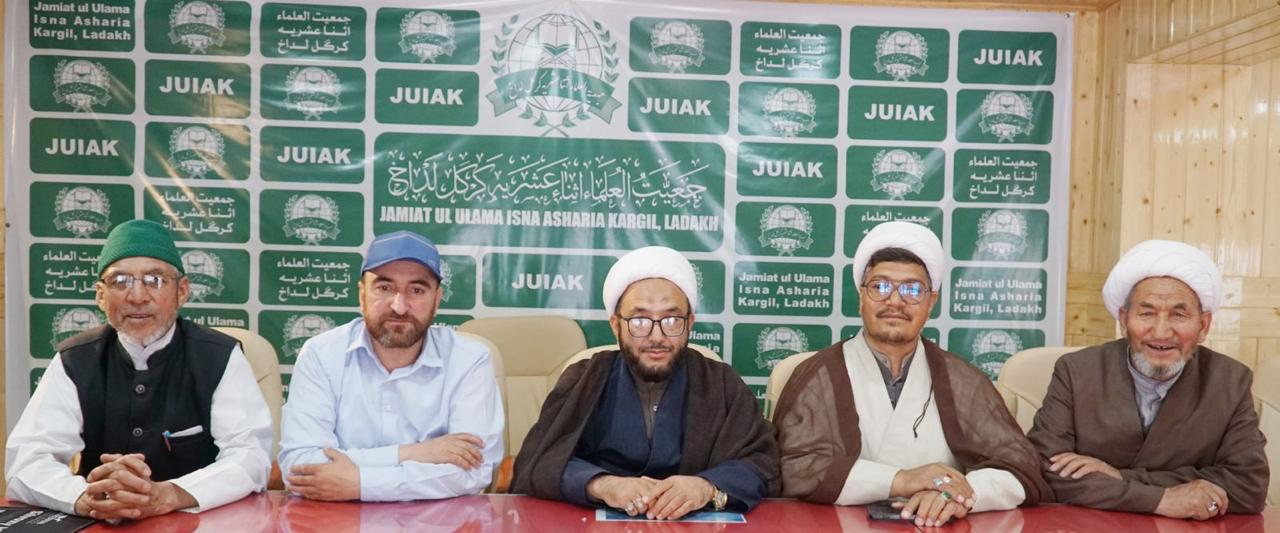
KARGIL : Jamiat Ul Ulama Isna Asharia Kargil (JUIAK) on Tuesday welcomed the breakthrough of the Zojila Tunnel, describing it as the fulfilment of a long-standing aspiration of the people of Kargil, Drass and Ladakh and a major step towards ending decades of seasonal isolation.
Addressing a press conference, JUIAK General Secretary Sheikh Ibrahim Khalili and In-charge Political Affairs Sajjad Kargili said the tunnel’s breakthrough marked a historic moment in the region’s developmental journey. They noted that the demand for all-weather connectivity through Zojila had been pursued for decades by local communities, social organisations, political leaders and public representatives.
Calling the achievement a tribute to generations who struggled for improved connectivity, the organisation said the breakthrough symbolised the hopes, sacrifices and perseverance of the people of Ladakh.
JUIAK expressed gratitude to the Government of India and acknowledged the role of Prime Minister Narendra Modi, Union Home Minister Amit Shah and Union Minister for Road Transport and Highways Nitin Gadkari in advancing the project. The organisation particularly credited Gadkari’s close monitoring and sustained commitment for accelerating work on the strategically important tunnel.
Sajjad Kargili described the development as a turning point for Ladakh, stating that it would transform connectivity and unlock new opportunities for economic growth and regional development.
The organisation also urged authorities to examine the possibility of allowing emergency and medical movement through the tunnel during winter months before its formal commissioning, citing the hardships faced by residents during prolonged road closures.
JUIAK commended NHIDCL, engineers, technical experts, workers and labourers for executing the project under challenging terrain and weather conditions.
Highlighting its wider impact, the organisation said the Zojila Tunnel would strengthen trade, tourism, healthcare, education and strategic connectivity while enhancing access to border areas.
