

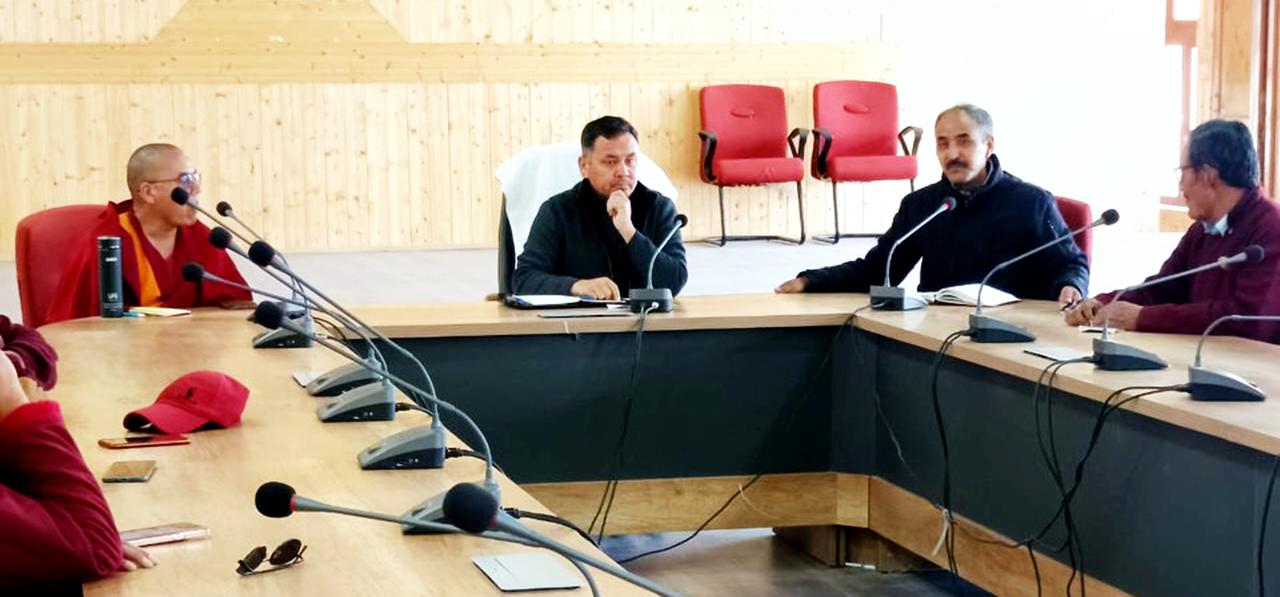
Leh, Apr 21: A Sub-Divisional Level Committee in Nubra on Monday outlined a structured roadmap for the implementation of the National Manuscript Survey under the Gyan Bharatam Programme, with authorities deciding to divide the region into ten survey zones to ensure systematic documentation and preservation of rare manuscripts.
The meeting, chaired by Jigmet Raftan, Sub-Divisional Magistrate, Nubra, focused on operational strategies to identify and catalogue manuscript heritage across the sub-division. Officials resolved that each of the ten zones would be overseen by a designated Master Surveyor responsible for coordinating and supervising fieldwork within assigned areas.
Participants underlined the urgency of preserving manuscripts that hold cultural, historical, and scholarly value, noting that a structured and time-bound approach would be central to the survey’s success. Survey teams have been tasked with executing the exercise in an organised manner, ensuring both coverage and accuracy.
The deliberations also centred on aligning local expertise with administrative oversight to strengthen the survey process. Representatives from monastic institutions and academic bodies emphasised the need for careful handling and documentation of fragile texts.
Among those present were Gashay Lobzang Zotpa of Samstanling Monastery, head lamas from Diskit and Yarma Gonpa, Tsewang Paljore of the Ladakh Academy of Art, Culture and Language, Sonam Dolkar, and Dr. Mingyur, along with subject experts and appointed surveyors.
Officials indicated that the zonal model is expected to streamline coordination and improve accountability, while also enabling closer engagement with local institutions that house manuscripts. The survey forms part of a broader national effort to safeguard documentary heritage through documentation, conservation, and archival planning.
