

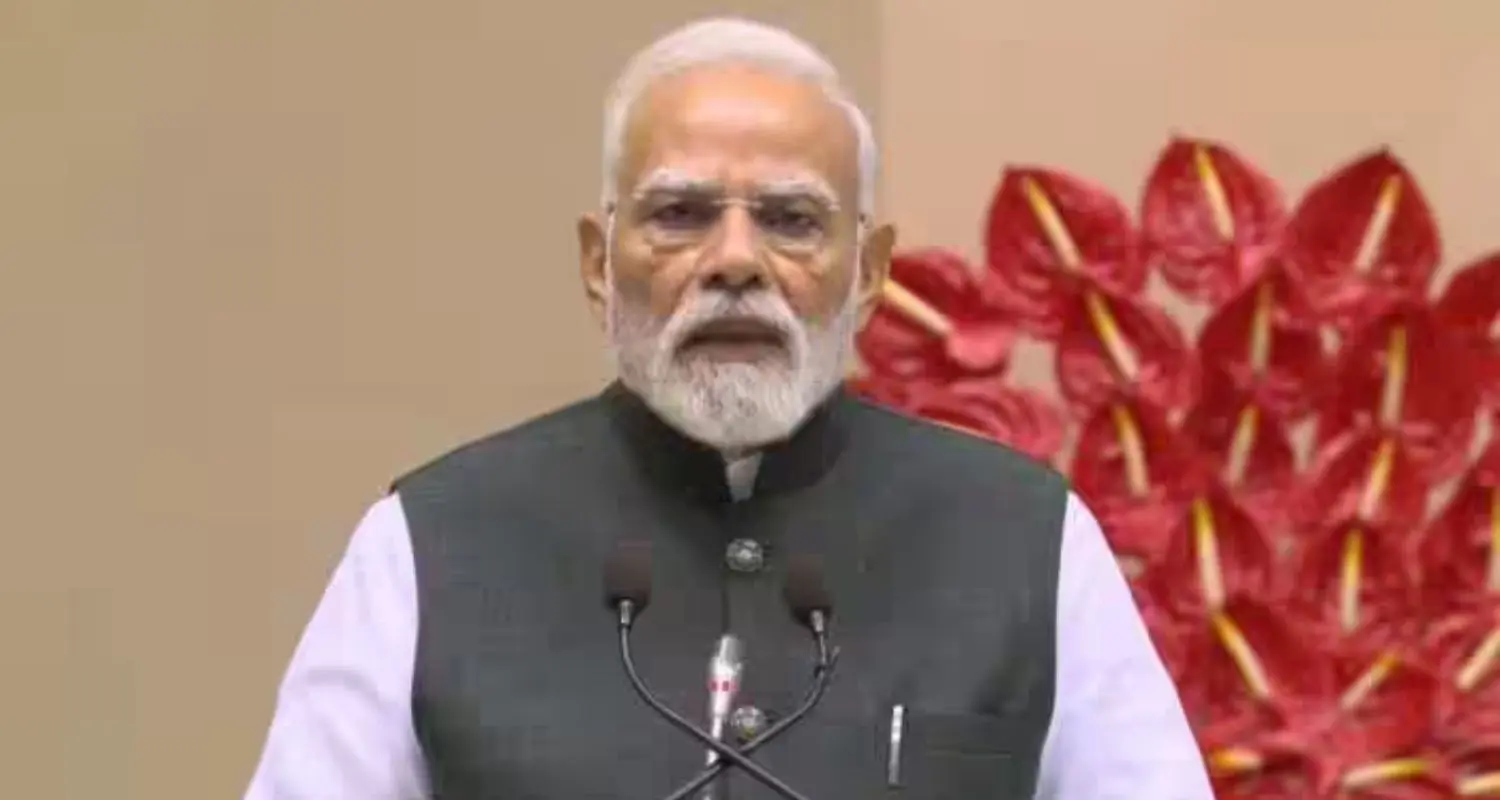
New Delhi, March 1: In a move signaling heightened vigilance, Prime Minister Narendra Modi is scheduled to chair a high-level Cabinet Committee on Security (CCS) meeting here tonight, Sunday evening, as the Middle East plunges deeper into chaos following Iran’s large-scale retaliatory attacks on US allies.
Government sources confirmed to select media that the agenda will zero in on the fast-evolving crisis triggered by the US-Israel air offensive against Iran, which claimed the life of Iran’s supreme leader. This prompted Tehran to unleash ballistic missiles and drones targeting key infrastructure in the UAE, Qatar, Bahrain, and beyond—killing one and injuring 11 at Dubai and Abu Dhabi airports, damaging luxury hotels like Dubai’s Fairmont The Palm and Burj Al Arab, and even striking near the US Navy’s Fifth Fleet in Bahrain.
For India, with over 8.5 million nationals in the Gulf—remitting nearly $100 billion annually and powering 60% of its oil imports—the stakes couldn’t be higher. The CCS, comprising key ministers like Home Minister Amit Shah, External Affairs Minister S. Jaishankar, Defence Minister Rajnath Singh, and Finance Minister Nirmala Sitharaman, will deliberate on multi-pronged responses.
Top of the list: Robust evacuation protocols for Indians in the firing line. With thousands of flights grounded at hubs like Dubai International (DXB)—the world’s busiest—and Abu Dhabi’s Zayed International (AUH), airlifts via military assets like C-17 Globemasters are under consideration. The Ministry of External Affairs (MEA) has already issued advisories urging Indians in UAE, Qatar, Bahrain, Kuwait, and Oman to stay indoors and register on the MADAD portal. “Operation Ajay” style rescues, as seen during the Israel-Hamas war, could be revived swiftly, sources said.
Embassy teams in Abu Dhabi and Dubai are on high alert after drone debris caused fatalities and fires at Jebel Ali port, a critical trade artery for Indian exports worth billions. Qatar reported 65 Iranian missiles intercepted but with fallout injuries, while Oman’s Duqm port—one previously spared—saw a worker hurt.
Economically, the blow is multifaceted. Brent crude has spiked over 5% to $85 per barrel amid fears of Strait of Hormuz disruptions, threatening India’s inflation targets and current account deficit. Gulf ports like Jebel Ali handle 20% of India’s non-oil exports; their partial shutdowns could delay shipments of textiles, gems, and pharma, exacerbating supply chain woes.
Remittances, a lifeline for Kerala, Uttar Pradesh, and Punjab households, face uncertainty if attacks persist. Gulf states’ diplomatic overtures to Iran—refusing US bases for strikes—failed to avert hits, raising questions on regional stability.
Defence experts note India’s balancing act: Strong ties with UAE (via I2U2) and Israel (defence supplier), yet pragmatic relations with Iran (Chabahar port). The CCS may greenlight enhanced naval patrols in the Arabian Sea, leveraging INS Vikrant’s deployment. Diplomatically, Jaishankar could ramp up calls with UAE’s Sheikh Mohammed and Qatar’s emir, building on recent Saudi-mediated talks.
This follows Modi’s pattern of crisis leadership—recall the swift Ukraine evacuations in 2022. Analysts like former ambassador M.K. Bhadrakumar term it “strategic foresight,” preventing a repeat of 1990’s Gulf War exodus of 1.75 lakh Indians.
As interceptions light up Gulf skies—witnessed by Dubai residents seeing 15 UAE missiles launch—the world watches. For India, tonight’s CCS isn’t just reactive; it’s about safeguarding 1.4 billion lives from distant fires
