

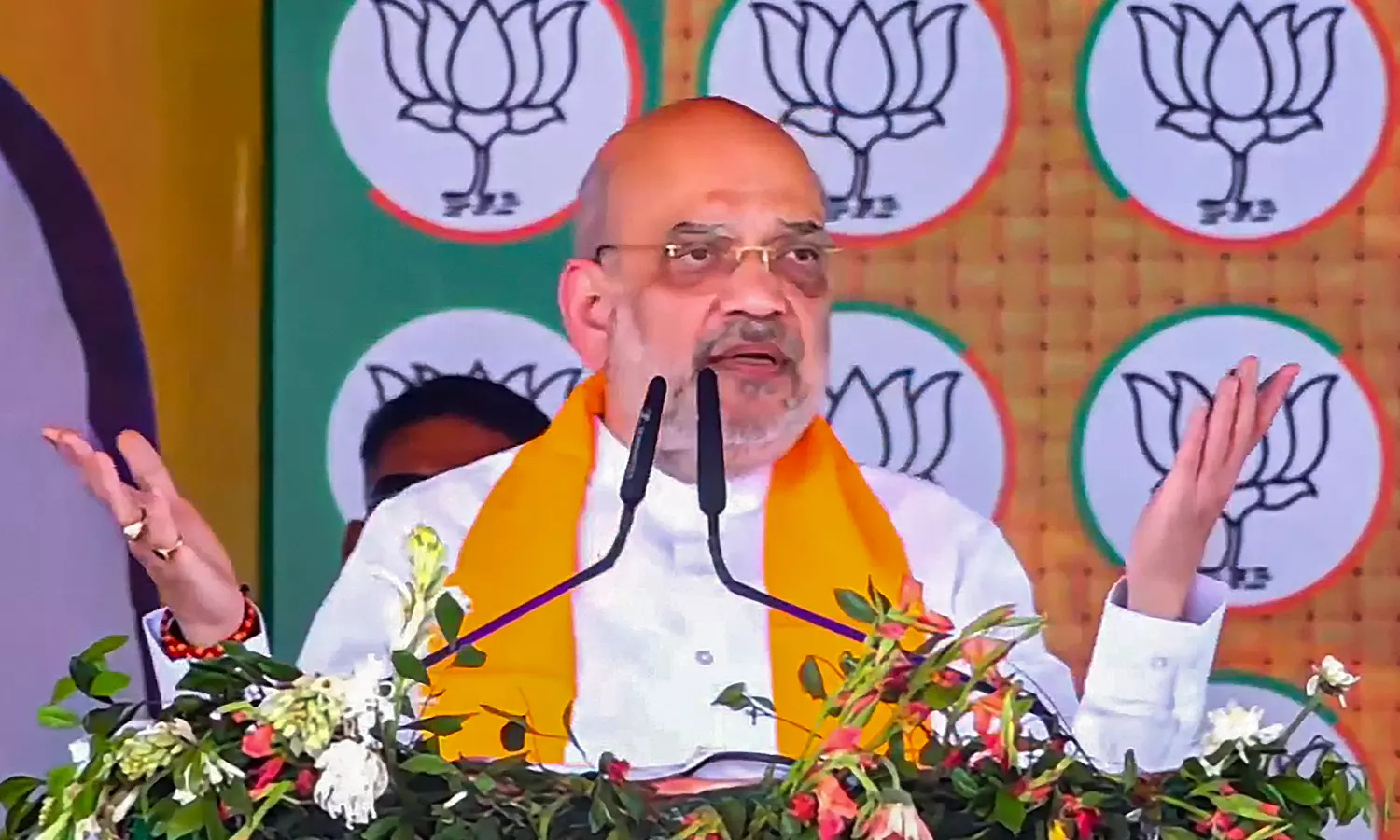
Ahmedabad Dec 28: India has achieved a 97 per cent reduction in malaria cases and is on track to eliminate the disease in a short time, Union Home Minister Amit Shah said, crediting flagship health schemes and increased public spending for the progress. He was speaking at the ‘All India Medical Conference – IMA NATCON 2025’ of the Indian Medical Association (IMA) in Shela, Ahmedabad, on Sunday.
Shah said initiatives such as Ayushman Bharat and Mission Indradhanush have played a key role in transforming health outcomes, noting that the government has also reduced the mortality rate in dengue to about 1 per cent and brought down maternal mortality by 25 per cent. He added that the Union health budget has risen from around Rs 37,000 crore in 2014 to Rs 1.28 lakh crore at present under Prime Minister Narendra Modi, underscoring that these gains were possible because schemes were effectively implemented on the ground.
Addressing doctors, Shah urged them to align their efforts with the expanding healthcare infrastructure and government schemes to deliver better results, stressing that a “healthy demography” is essential to realise the vision of a Viksit Bharat by 2047. He said the Centre has been working since 2014 to build a robust, holistic health ecosystem, citing Swachh Bharat Mission, Ayushman Bharat, Fit India Movement and Khelo India as key pillars of this approach.
The minister highlighted steps such as making generic medicines affordable, cutting the cost of several drugs by removing GST, increasing medical seats and expanding the reach of AIIMS across the country. He said the government plans to launch a programme through AIIMS to provide guidance to primary and community health centres via telemedicine and video-based consultations, further strengthening grassroots healthcare delivery.
On the IMA’s centenary, Shah called on the association to rethink its role in the context of ensuring affordable, accessible and quality healthcare for all. He said medical ethics and the broader “dimensions” of the profession should be integrated into medical education so that future doctors see their work as a service to the nation rather than just a career.
Shah also appealed to the IMA to draw up a list of doctors willing to volunteer three hours a day to provide free diagnosis to needy citizens through telemedicine networks, and asked the body to use its expertise to help resolve long-pending health sector challenges. He urged practitioners to embrace a wellness-oriented approach, advising that along with prescribing medicines they should encourage patients to adopt healthier lifestyles and habits.
Expressing displeasure over attempts by “some” in the medical community to downplay the impact of Ayushman Bharat and the promotion of generic drugs, Shah said these schemes are vital to bridge gaps in the healthcare system. He remarked that private-sector doctors are not in competition with anyone and, while they are not obliged to glorify government initiatives, efforts to belittle them should stop, as these programmes are designed to serve those who lack access to adequate care.
