

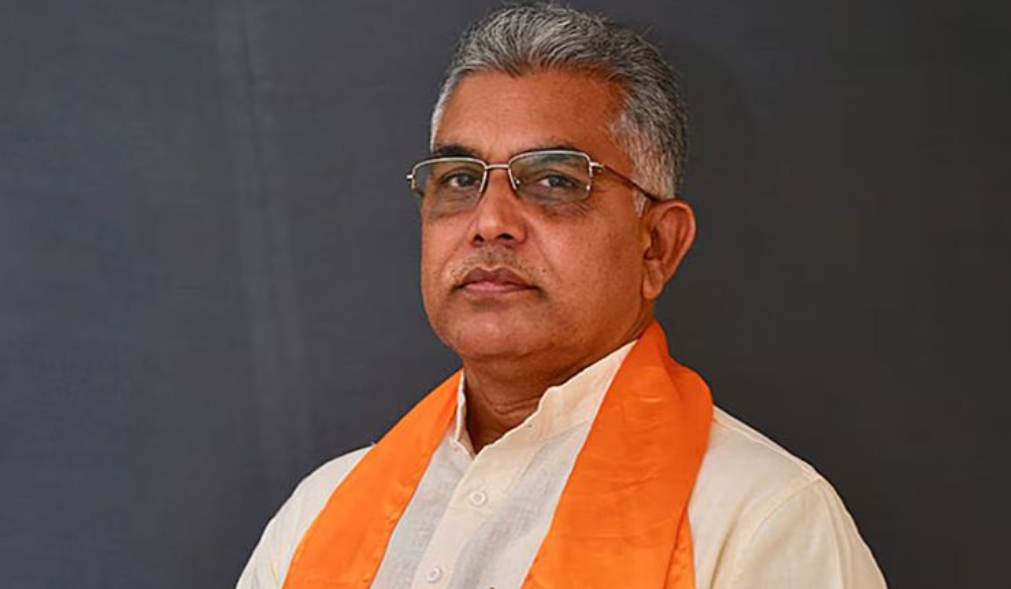
Kolkata, October 25 : Senior BJP leader and West Bengal minister Dilip Ghosh on Sunday criticised Jammu and Kashmir National Conference president Farooq Abdullah over his recent remarks on Pakistan, accusing him of practising divisive politics and creating fear among the people.
Speaking to reporters in Kolkata, Ghosh said Jammu and Kashmir had undergone significant changes under the BJP-led Central Government, claiming that terrorism had declined and development activities were progressing across the region.
He alleged that some political leaders had relied on Pakistan-related rhetoric and fear for decades to sustain their political influence. Ghosh asserted that people now wanted development and that such politics would no longer work.
Describing Jammu and Kashmir as an integral part of India, the BJP leader said the region’s development remained a national priority. He also claimed that the BJP was better positioned to deliver progress and stability.
The controversy follows remarks by Farooq Abdullah, who said Pakistan’s efforts to raise the Kashmir issue at international forums had helped keep it alive. Abdullah also questioned whether the people of Jammu and Kashmir could expect justice from the Centre and urged them to protect their identity.
His comments triggered strong reactions from BJP leaders and other organisations, with several accusing him of echoing Pakistan’s narrative and demanding action against him.
BJP leader Ravinder Raina criticised Abdullah, citing Pakistan’s alleged role in supporting terrorism in Jammu and Kashmir. Other BJP leaders and political figures also condemned his remarks.
Jammu and Kashmir Deputy Chief Minister Vijay Sharma questioned Abdullah’s position, while Vishwa Hindu Parishad leader Vinod Bansal accused him of praising Pakistan despite living in India.
The Congress, while distancing itself from Abdullah’s comments on Pakistan, criticised the Centre over the continued delay in restoring statehood to Jammu and Kashmir.
Congress leader Ravinder Sharma reiterated that Jammu and Kashmir was an integral part of India and argued that Pakistan had no right to internationalise bilateral issues. He also raised concerns over the region’s administrative status.
Congress leader Rashid Alvi said he disagreed with Abdullah’s remarks but pointed to protests in Pakistan-occupied Kashmir against the Pakistani government.
The exchange has intensified the political debate over Kashmir, the Centre’s policies and the role of Pakistan in the region.
