

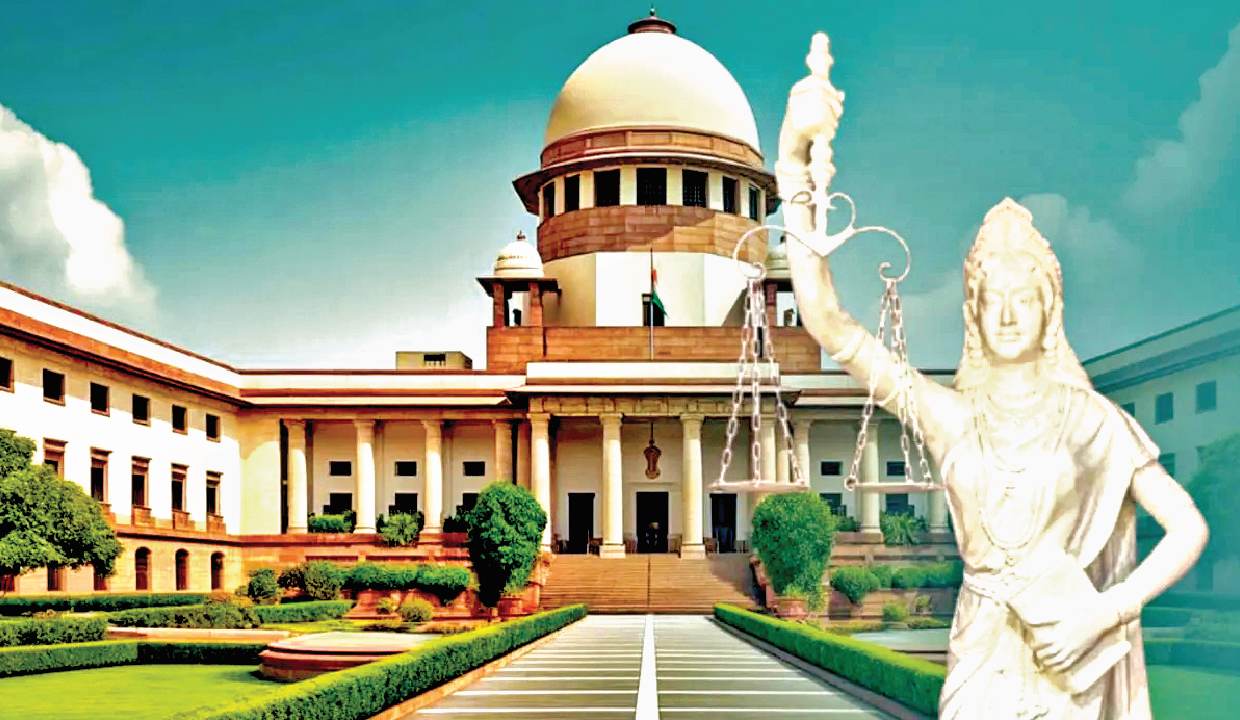
New Delhi, Feb 21: In a passionate call to action, the Supreme Court has slammed India’s patchy garbage management, saying we can’t keep kicking the trash can down the road while dreaming of tech superpower status. Justices Pankaj Mithal and S V N Bhatti made it crystal clear – a clean environment isn’t some luxury, it’s baked into our fundamental right to life under Article 21.
The bench dropped this reality check while hearing appeals against National Green Tribunal orders slamming Bhopal Municipal Corporation for messing up under the old 2016 Solid Waste Management Rules. But this isn’t just about one city – the court went nationwide, laying down the law ahead of the tougher SWM Rules 2026 that kick in April 1.
Picture this: despite years of mandates, most cities and villages still dump everything together – wet kitchen scraps mixed with plastic bottles and hazardous medical waste. Massive garbage mountains still poison metro skylines, even as some bio-remediation projects crawl forward. The justices didn’t mince words: “Compliance remains uneven across India.”
As India’s economy booms, so does our waste pile. The court connected the dots – more money means more consumption, more packaging, more trash. Neglect it, and we’re not just choking our rivers and lungs; we’re tanking public health and economic growth when the world watches us flex AI and tech muscle.
The bench got personal, calling out councillors, mayors, and ward members as the “lead facilitators” who must personally educate every household in their patch. No more passing the buck – these elected reps have a statutory duty to make source segregation happen.
District collectors become waste warriors, ordered to audit infrastructure, set hard deadlines for 100% compliance, and report gaps straight to chief secretaries. Local bodies must email photo proof of cleanup progress – no more fudging reports.
Here’s what the court laid down in exhaustive detail:
Collectors empowered to oversee every municipality and gram panchayat
Non-compliance reports escalate from district to state to Centre
Bulk waste generators (hotels, malls, hospitals) get rules + court order today, must comply by March 31
Pollution boards fast-track facilities for 4-stream segregation (wet, dry, sanitary, special care)
Every local body declares firm timeline for total compliance
Tier 1: Spot fines for first-time offenders
Tier 2: Criminal prosecution for repeat violations
Tier 3: Mobile courts for real-time crackdowns
Officials who sleep on duty face the music too
Ministry of Environment adds waste management to school books (Rule 33)
Rules translated to every local language
Mass campaigns teach households composting, sanitary waste wrapping, waste minimization
Citizens must hand over properly segregated trash
In a novel move, the Supreme Court called on High Court Chief Justices and NGT chairpersons to ensure even judicial institutions follow SWM Rules 2026 from Day 1. No one’s exempt.
“It is now or never,” thundered the bench. Expecting miracles without grassroots segregation and infrastructure is fantasy. Every citizen, corporation, and government body shares the blame – and the solution.
As April 1 approaches, India’s facing its final warning. The justices made it personal: this generation can’t wait for perfect laws when basic execution fails daily. Clean India isn’t a slogan anymore – it’s a Supreme Court order with jail time attached.
