

New Delhi, Jan 18: Calling the upcoming Census 2026–27 a foundational element of the Government of India’s vision of Viksit Bharat, Amit Sharma, IAS, Director Census Operations (DCO) and Director Citizen Registration (DCR) for the Union Territories of Jammu & Kashmir and Ladakh, on Saturday outlined the scope and structure of India’s first fully digital and paperless Census at the 6th Digital Transformation Summit & Awards in the national capital.
Sharma was invited as a keynote speaker and special guest at the summit organised by Governance Now Group, where he addressed senior bureaucrats, technology experts, public sector leaders, policymakers and national e-Governance awardees on the theme “Building Digital-First Governance.”
During his address, the DCO/DCR explained that the Census 2026–27 will introduce several citizen-facing and technology-driven features. These include a self-enumeration facility allowing citizens to fill in their own details, supported by geo-tagging, and a fully paperless enumeration process. Enumerators and supervisors will record data directly on their own devices through a dedicated application developed by C-DAC.
He further said that Census data will be processed swiftly in indigenous data centres of the Office of the Registrar General and Census Commissioner of India, enabling early release of reports. The use of advanced digital tools, he noted, is expected to ensure cleaner, transparent and error-minimised data. Sharma also referred to the “Census as a Service (CaaS)” framework announced by the Government of India, describing it as a shift in how Census data will support governance and policy planning.
Linking the exercise to long-term national goals, Sharma said the digital Census would have wide-ranging implications for India’s economy, demography and political processes, and would also contribute to reshaping the country’s EXIM policy. He termed the Census a critical input for evidence-based decision-making in a country that is the world’s largest democracy and among the most populous nations.
The DCO/DCR urged participants at the summit to act as messengers of the upcoming digital Census, calling upon institutions, professionals and citizens to support the process. He pointed out that this would be the first time since the inception of Census operations in India—well before Independence—that the exercise would be conducted in an entirely digital format.
On the sidelines of the event, Sharma invited the Governance Now Group to take the lead in organising a national-level Census awareness and sensitisation programme in Jammu & Kashmir. He proposed that experts from across the country be brought together to explain different aspects of the Census 2026–27, with the aim of improving public understanding and participation.
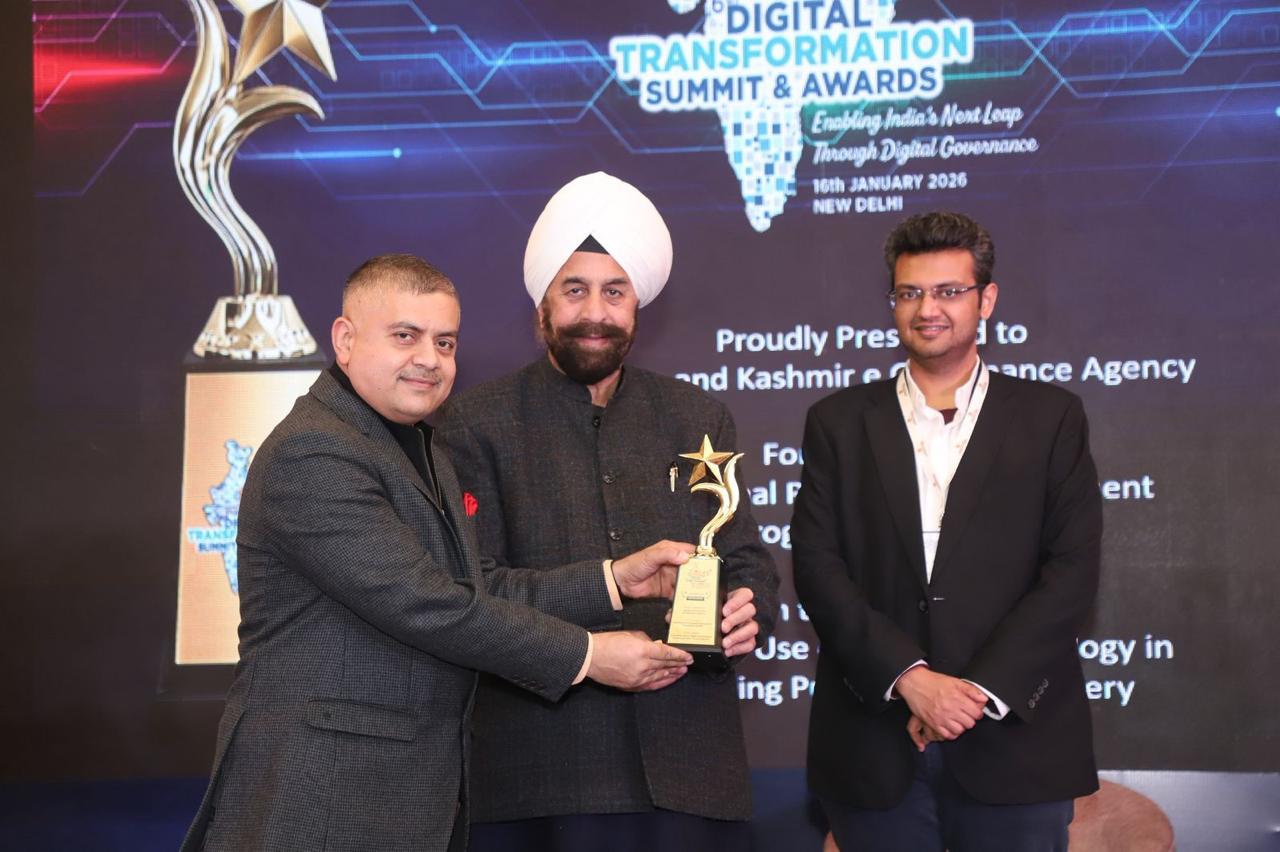
The final session of the summit saw recognition of notable e-Governance practices from across the country. Sharma’s earlier tenure as ICT Secretary in Mizoram was recalled for initiatives such as e-Office, Bhashini, DigiLocker and the Mizo Fibre Grid Network project. He also joined the Jammu & Kashmir team in receiving an award related to e-Governance initiatives in the rural development sector.
The organisers and participants expressed appreciation for Sharma’s address, stating that it provided clarity on the upcoming Census and its digital framework. The gathering assured full cooperation in supporting the Ministry of Home Affairs-led Census exercise in the months ahead, culminating in February 2027.
