

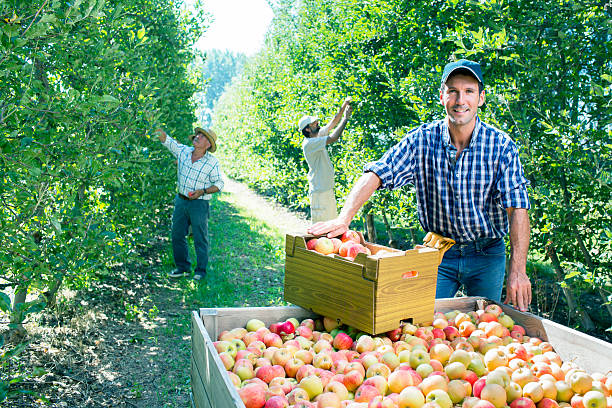
SRINAGAR, Dec 26: The Jammu and Kashmir National Conference has urged the Government of India to reconsider its decision to import apples under the new trade agreement with New Zealand, cautioning that it could devastate the Kashmir apple industry.
Party spokesperson Imran Nabi Dar told media persons that past imports of foreign apples had already harmed local growers and traders. He stressed that no tax exemptions should be granted to imported apples under the new agreement and demanded reasonable taxation to protect Kashmiri apple growers.
“Kashmiri apples are not only superior in taste but also highly beneficial for health. No foreign apple can match the quality of Kashmiri produce,” Dar said.
Dar noted that a significant portion of Kashmir’s population depends directly or indirectly on the apple industry, which has already incurred losses of approximately Rs 2,000 crore this year due to adverse weather conditions, road closures, and floods.
He appealed to the central government to avoid any decision that could further weaken the fragile apple economy of Jammu and Kashmir.
Responding to queries about the Supreme Court’s rejection of a PDP PIL seeking the return of prisoners from outside Jammu and Kashmir, Dar dismissed it as political theatrics.
“We had said from day one that the PIL was merely an attempt at electioneering. The Supreme Court has also termed it political in nature and clarified that courts cannot be used as platforms for election campaigning,” he said.
Dar pointed out that the petition was filed hastily during the Budgam election campaign, lacking material documents and based on vague claims—observations also noted by the apex court.
He described the issue of Kashmiri prisoners’ return and release as sensitive and serious, arguing that if the PDP were sincere, they would have filed a well-researched, fact-based petition instead of exploiting the issue for political gains.
Dar reminded that the process for repatriating Kashmiri prisoners was initially launched during the tenure of late PDP founder Mufti Muhammad Sayeed and his close associate Muzaffar Hussain Baig.
